The House We Carried With Us
A Journey of Courage and Sacrifices
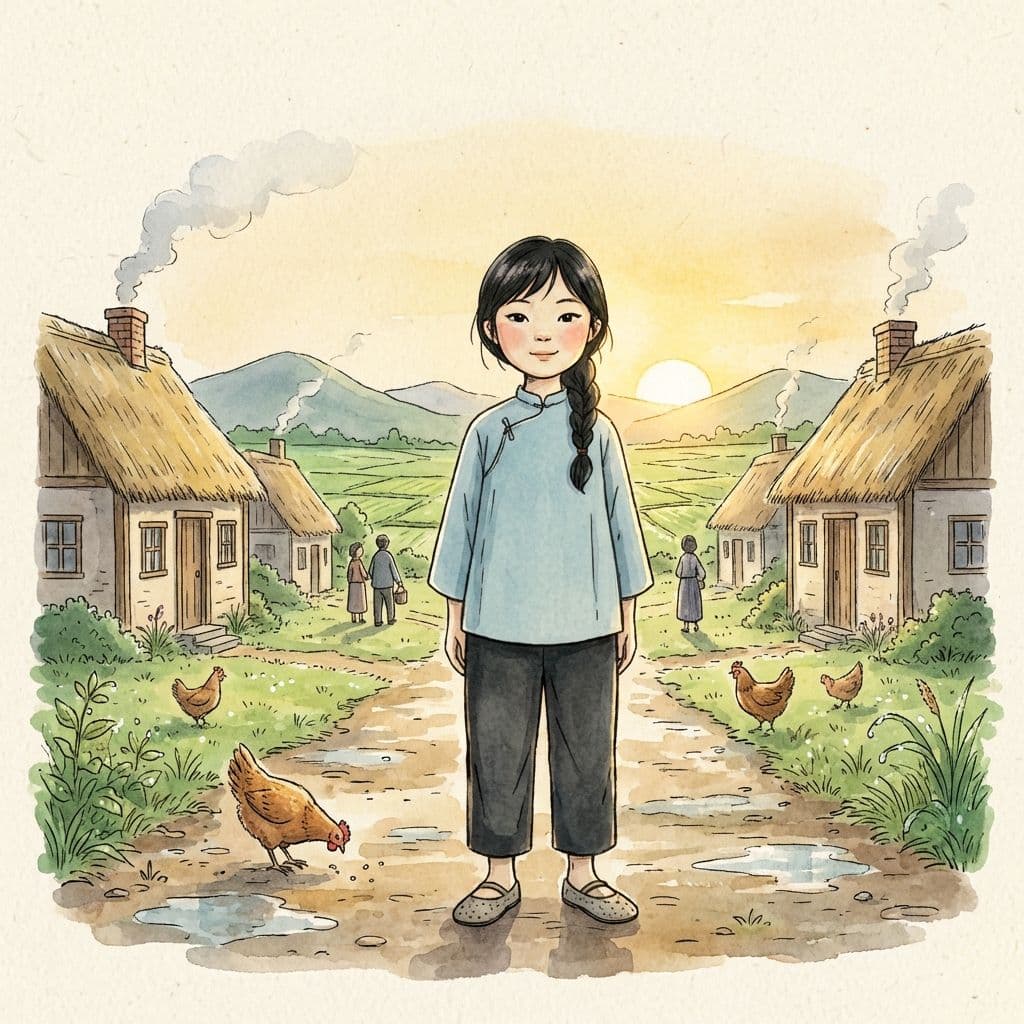
The sun always seemed to wake up slowly in my village, stretching its golden arms across the green fields before touching the roofs of our houses. I remember standing in the middle of the dirt road, feeling the warmth on my face. The air smelled of damp earth and morning dew. To me, this was the center of the world. It was a place where everyone knew my name, and the chickens clucked a greeting as I walked by. Everything felt permanent, like the big mountain in the distance that never moved.
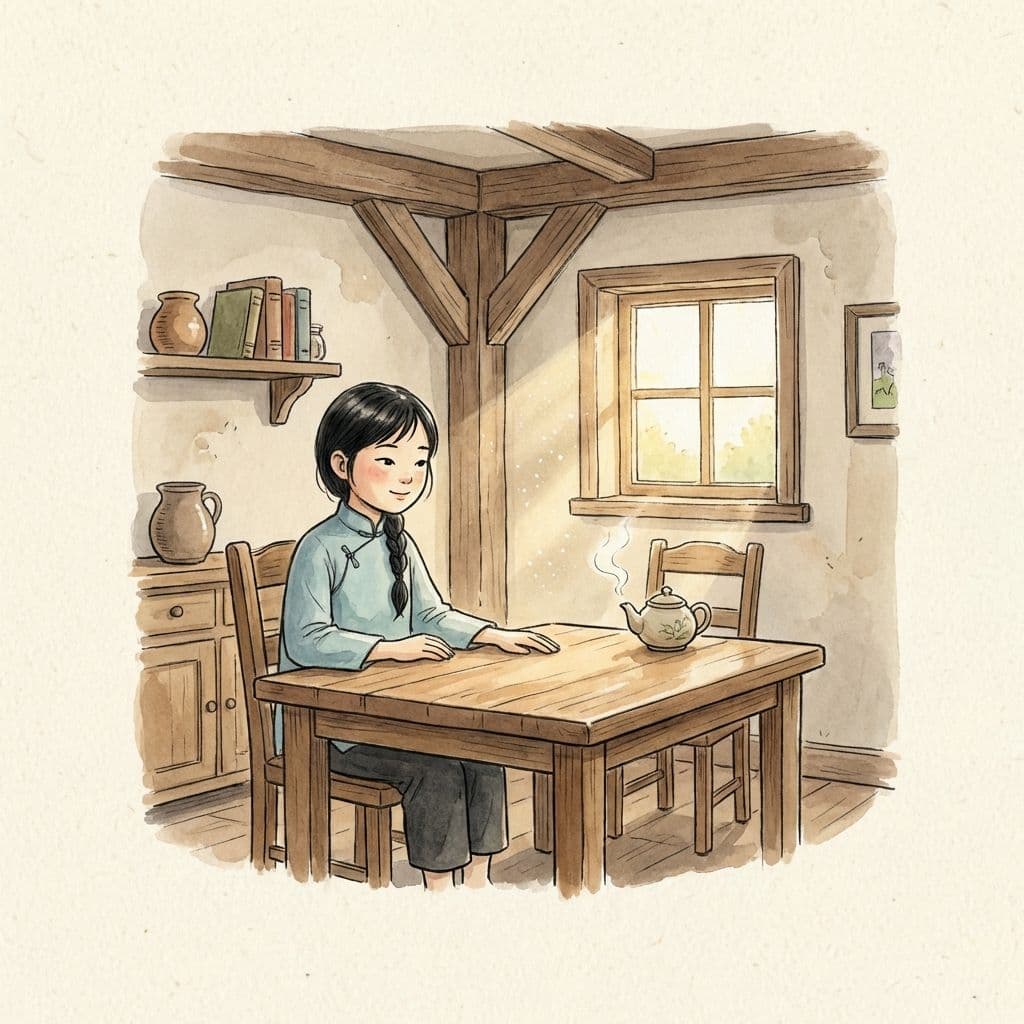
Our house was not a palace, but it was my kingdom. The walls were made of sturdy wood that creaked when the wind blew, singing a song I knew by heart. Sunlight would sneak in through the square window, making the dust dance in the air like tiny fairies. My father had built the table where we ate, smoothing the wood until it was soft under my fingers. It was a house filled with laughter and the smell of jasmine tea, a safe shell that protected us from the rain and the dark.
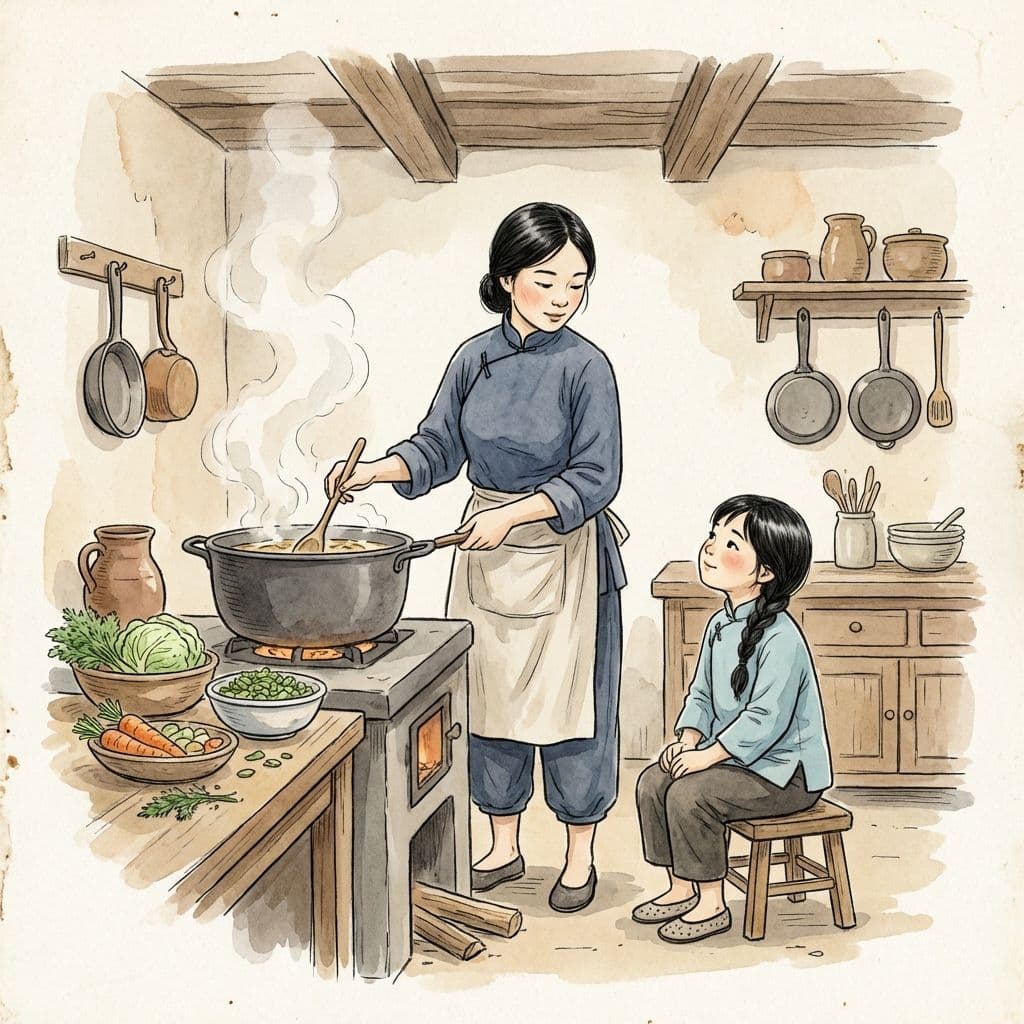
My mother was the magician of our home. She did not use wands or spells, but she used a heavy iron pot and a wooden spoon. From that pot came the most wonderful smells—ginger, garlic, and steaming rice. She would stand by the stove, her face glowing from the heat, humming a tune as she chopped vegetables. I would sit on my small stool, watching her hands move quickly and surely. She made sure our bellies were always full and our hearts were always warm.
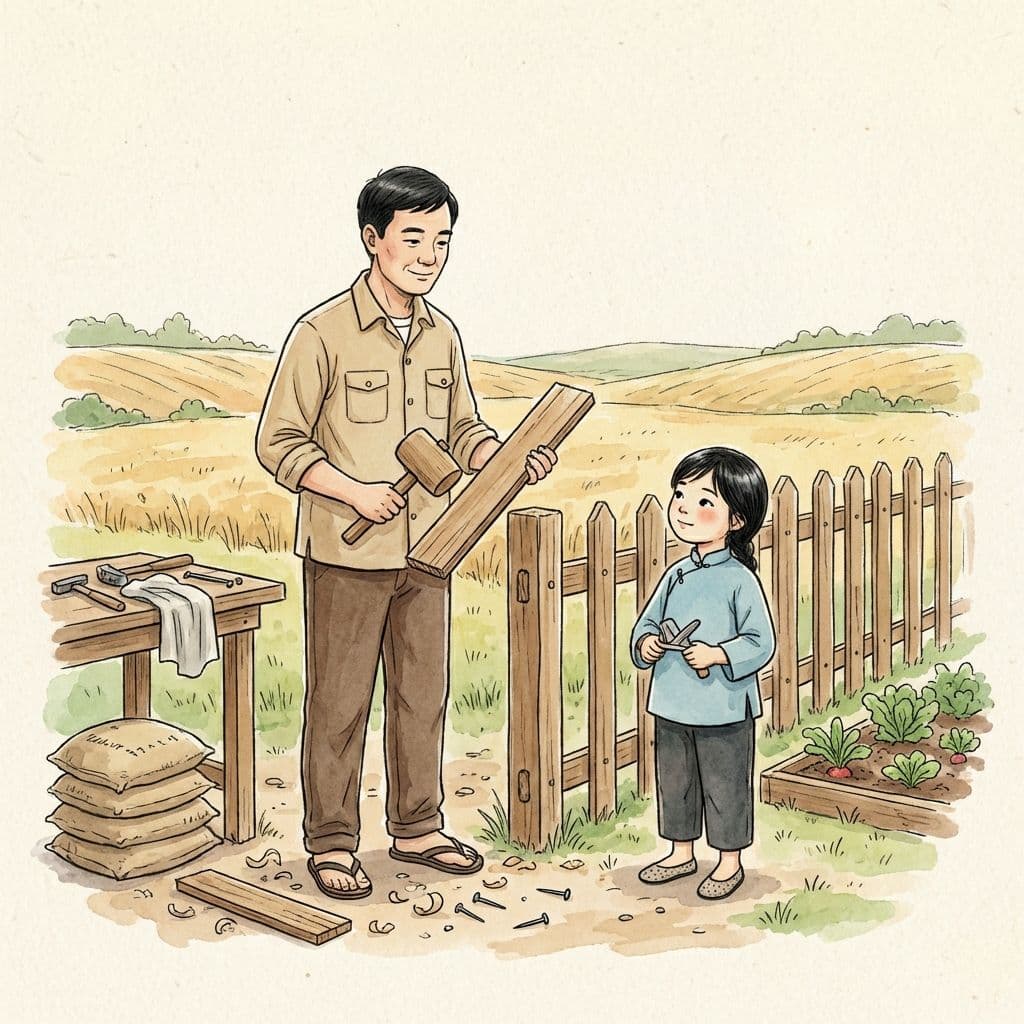
My father was the strongest man I knew. He did not say many words, but his hands told stories of hard work. He would spend his days in the fields or fixing things around the house. When he hammered a nail or lifted a heavy sack of rice, he did it with a calm focus. He taught me that taking care of your home was a way of showing love. 'A house stands tall because of the care you give it, Mei,' he would say, wiping sweat from his forehead with a smile.
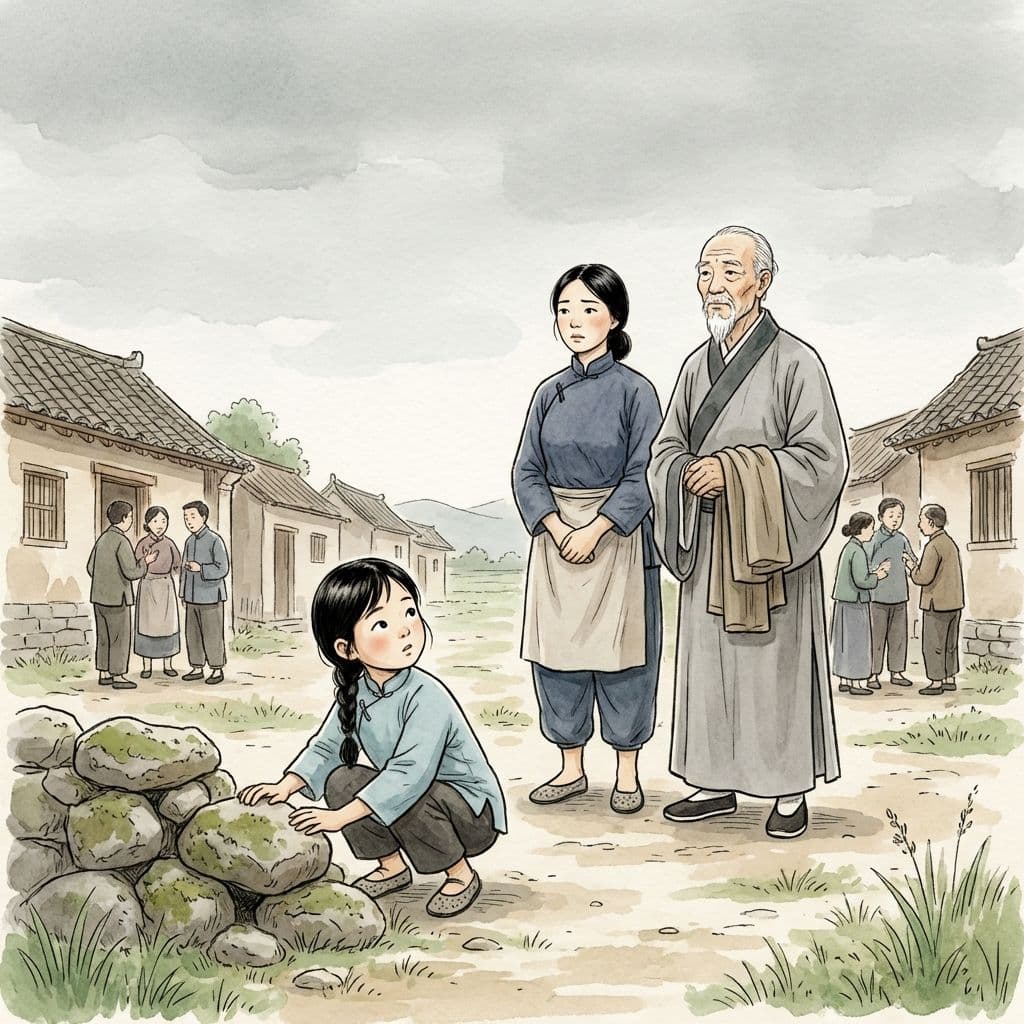
One day, the wind seemed to change direction. It didn't bring the smell of rain, but something else—whispers. I was playing with stones near the edge of the village when I noticed the adults acting strangely. They stopped laughing loudly. Instead, they stood in small circles, speaking in low voices. They looked toward the horizon, where the sky seemed a little grayer than usual. I didn't understand the words 'conflict' or 'advancing,' but I understood the worry etched on their faces.
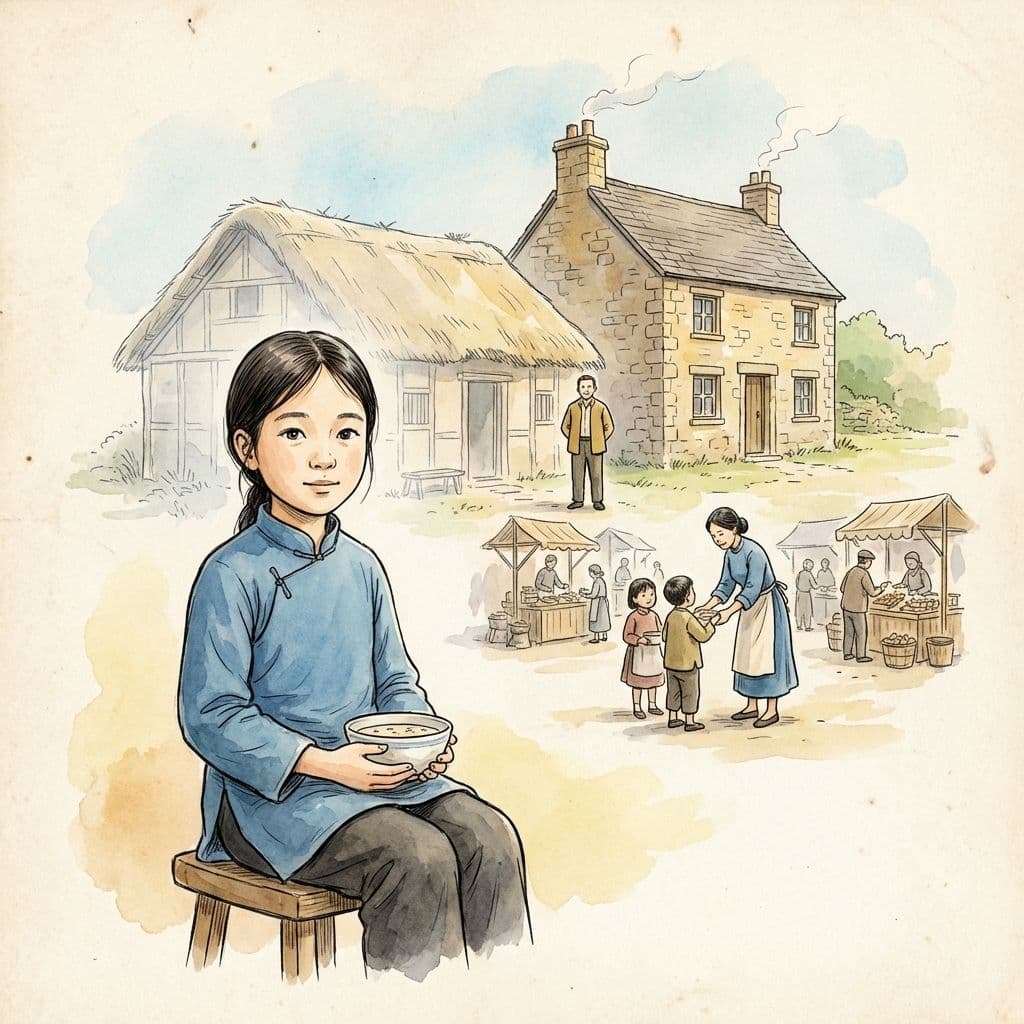
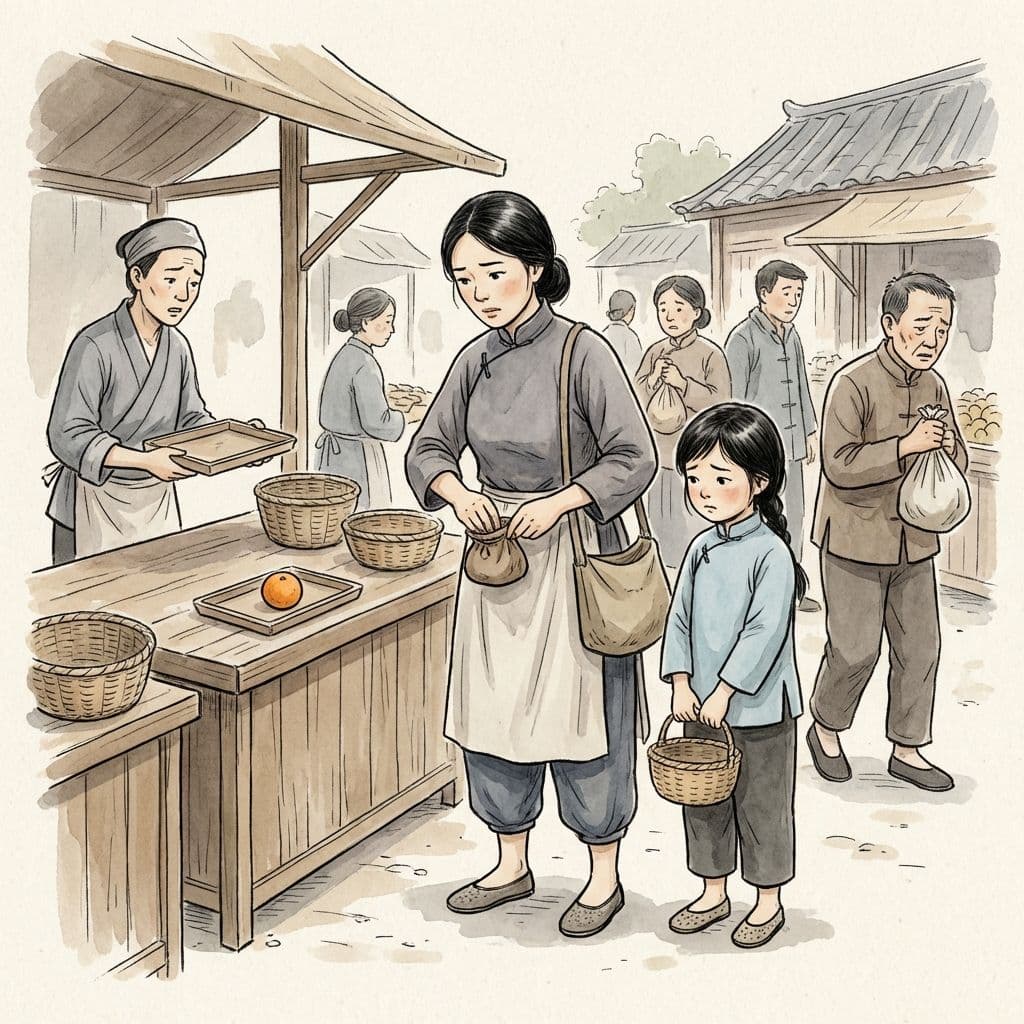
Mother took me to the market, but it was not the joyful place it used to be. Usually, the stalls were overflowing with bright red apples, green bok choy, and squawking chickens. But today, many tables were bare. The fruit seller shook his head sadly when Mother asked for oranges. People moved quickly, buying whatever they could find, clutching their bags tight against their chests. The playful chatter was gone, replaced by a hurried silence that made my stomach feel tight.
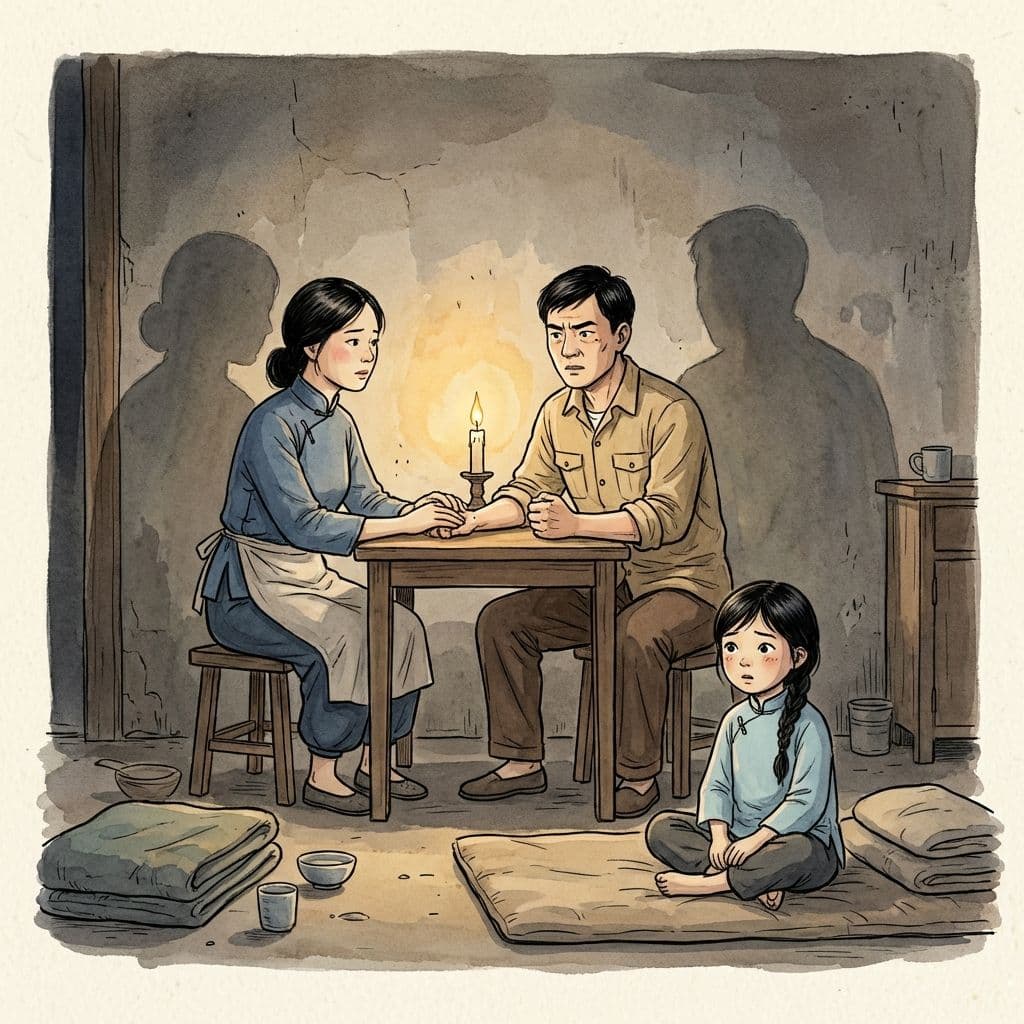
That night, the fear from the market followed us home. Father and Mother sat at the wooden table with only a single candle burning between them. They thought I was asleep, but I was watching from my mat. Their shadows danced on the wall, looking larger than life. 'We cannot wait much longer,' Father said quietly. Mother nodded, her hand covering his. The house that usually felt so strong now felt fragile, like a leaf trembling in a storm.
The next morning, the Village Elder rang the brass gong. The sound rippled through the air, calling everyone to the square. Elder Li stood on the wooden platform, leaning on his staff. He was the oldest person in our village, with a beard as white as winter snow. Everyone became very quiet. Even the babies stopped crying. We knew that Elder Li only called us together when something very important was happening. I held my mother's hand tightly.
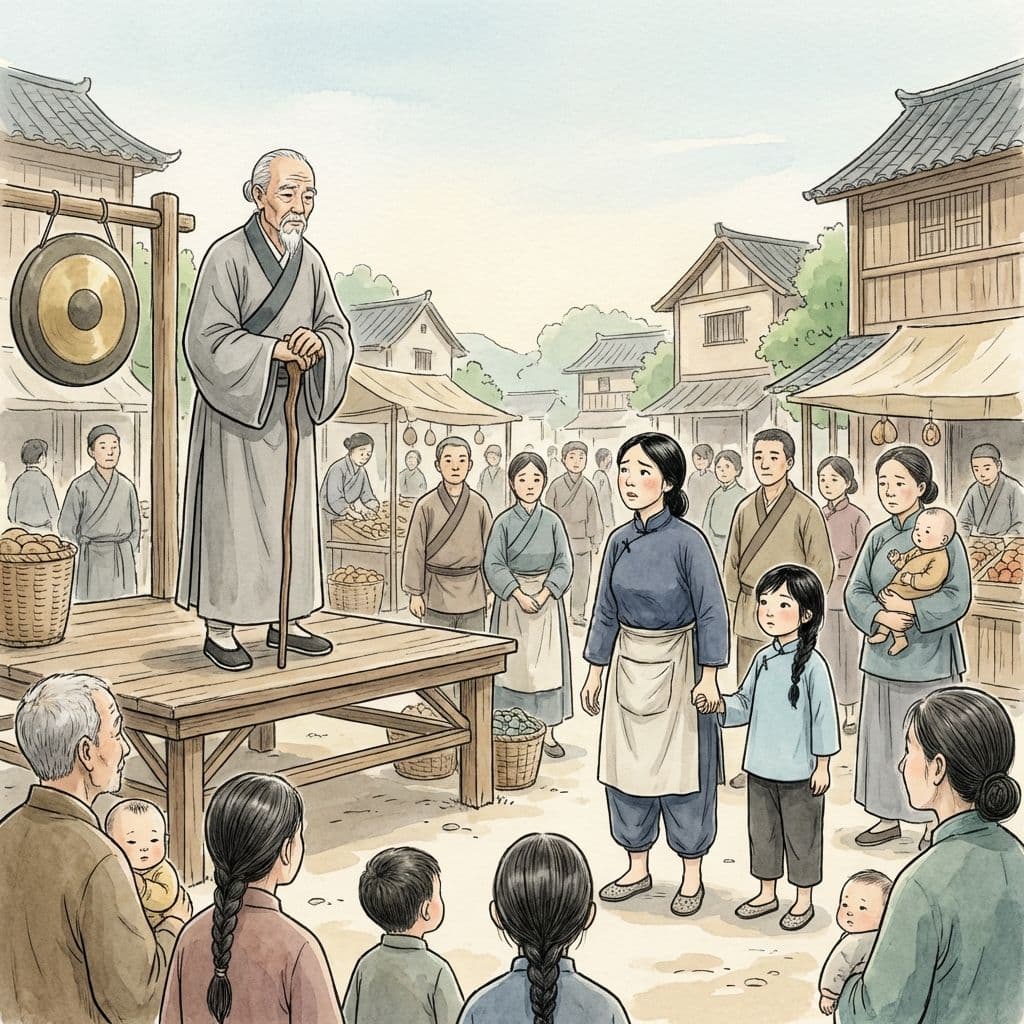
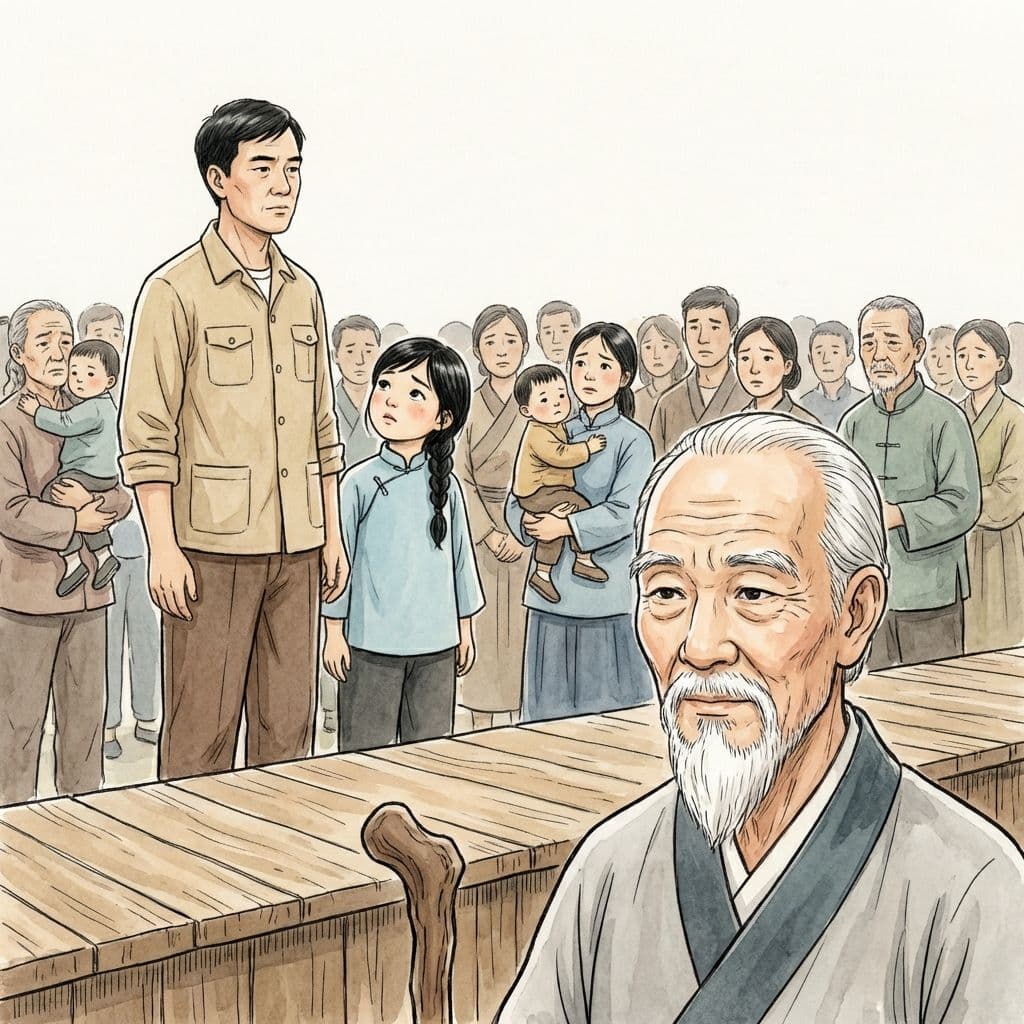
'My children,' Elder Li began, his voice raspy but clear. 'The rumors we hear are true. The trouble is moving closer to our valley. It is not safe to stay here anymore.' A gasp went through the crowd like a wave. 'We must go to our relatives in the safer lands. Do not cling to your possessions. Your life is more precious than your furniture.' His words hung in the air, heavy and true. I looked up at my father, waiting for him to say it wasn't true, but he just set his jaw firm.
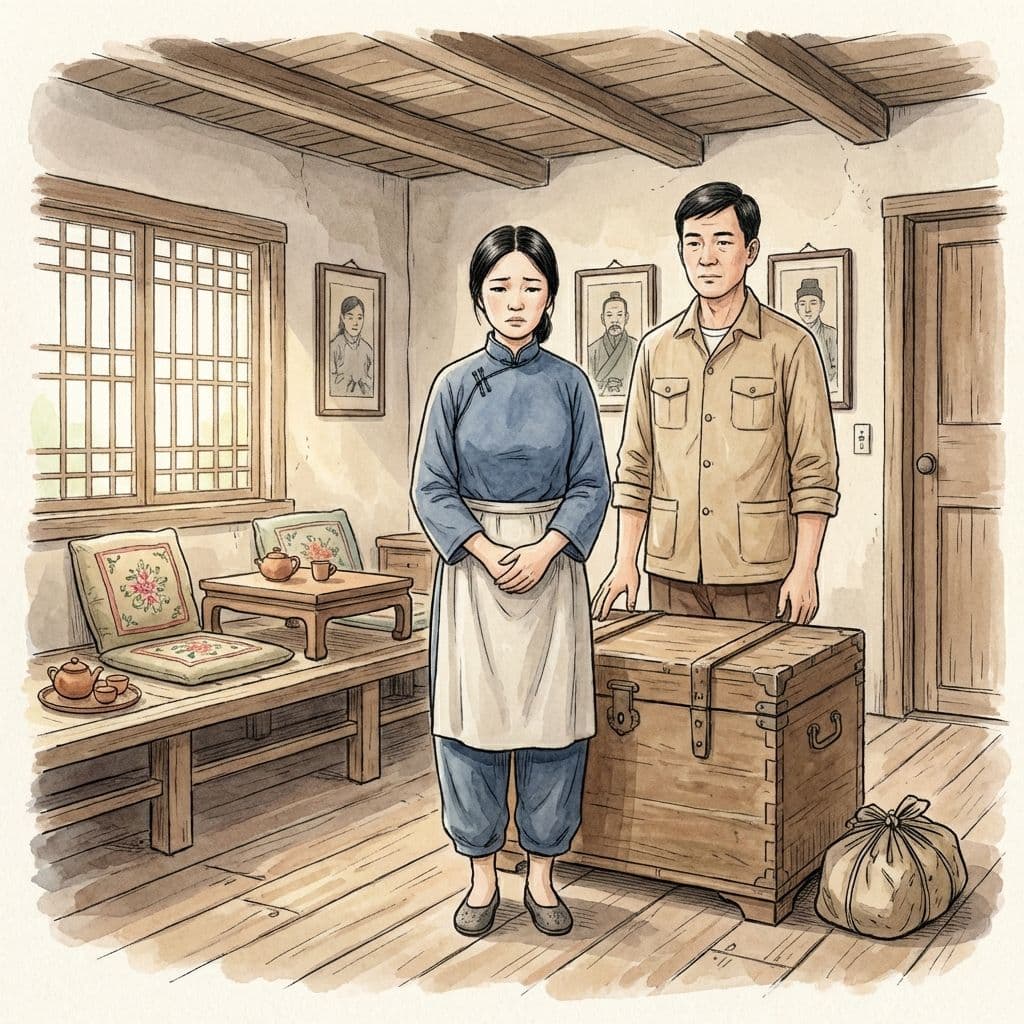
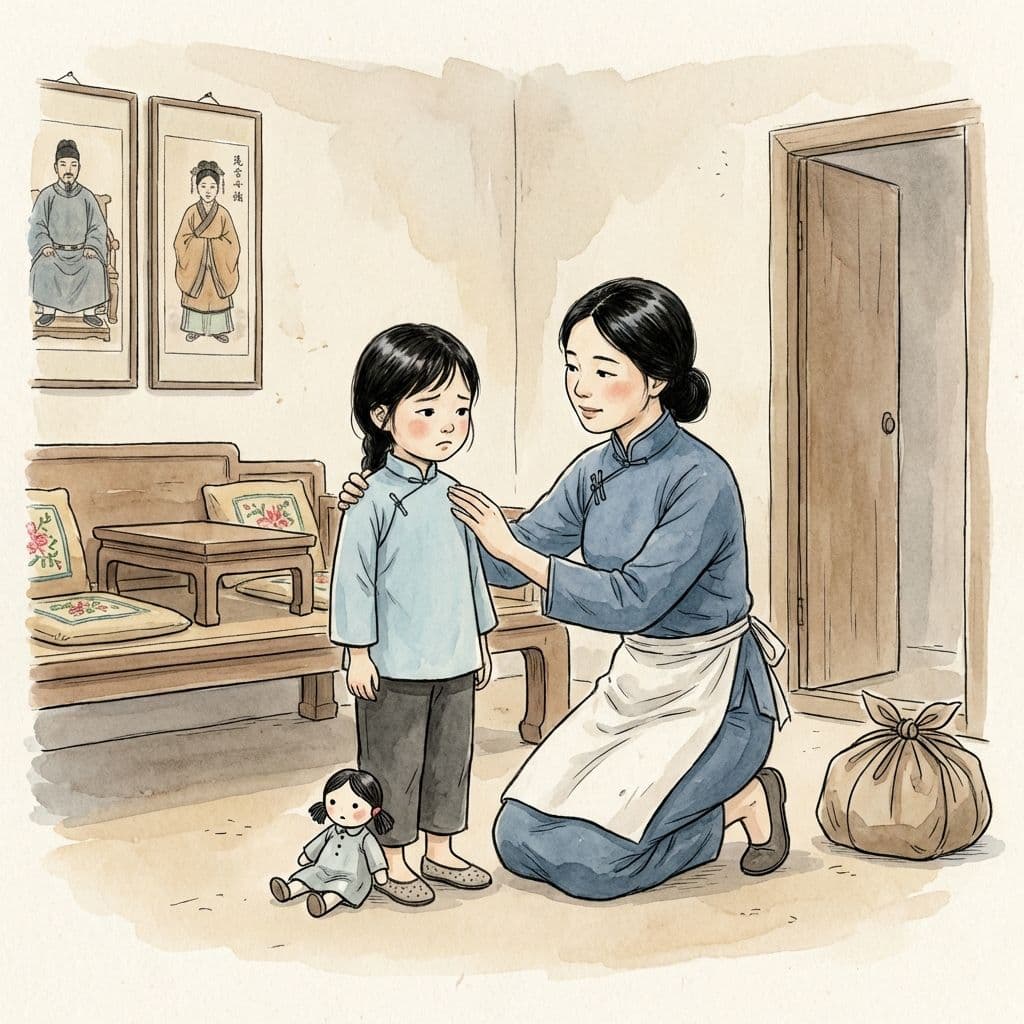
We walked back to our house in silence. The decision had been made without words. We were leaving. Standing in the middle of our main room, Mother and Father looked around at the things they had worked so hard for. The embroidered cushions, the heavy wooden chest, the paintings of ancestors. They looked sad, but their eyes were clear. They knew that to save the family, they had to lose the house. It was a trade: wood and stone for breath and future.
Mother knelt down so she could look right into my eyes. 'Mei, my little flower,' she said softly. 'We are going on a trip. A long walk.' I asked when we would come back. She hesitated, and a shadow crossed her face. 'We are going to stay with Auntie for a while. It will be an adventure.' I knew adults sometimes called scary things 'adventures' to make them sound better. I nodded, trusting her, even though my heart felt heavy like a stone.
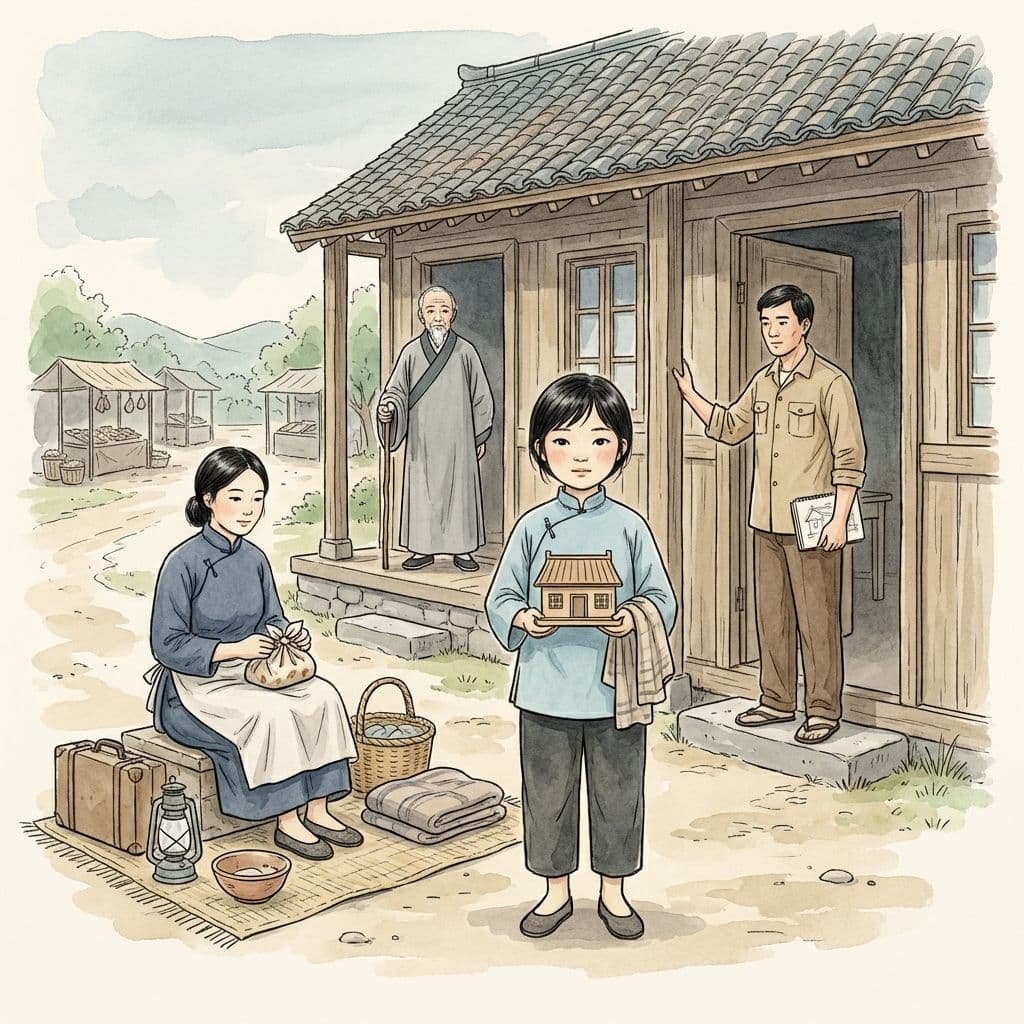
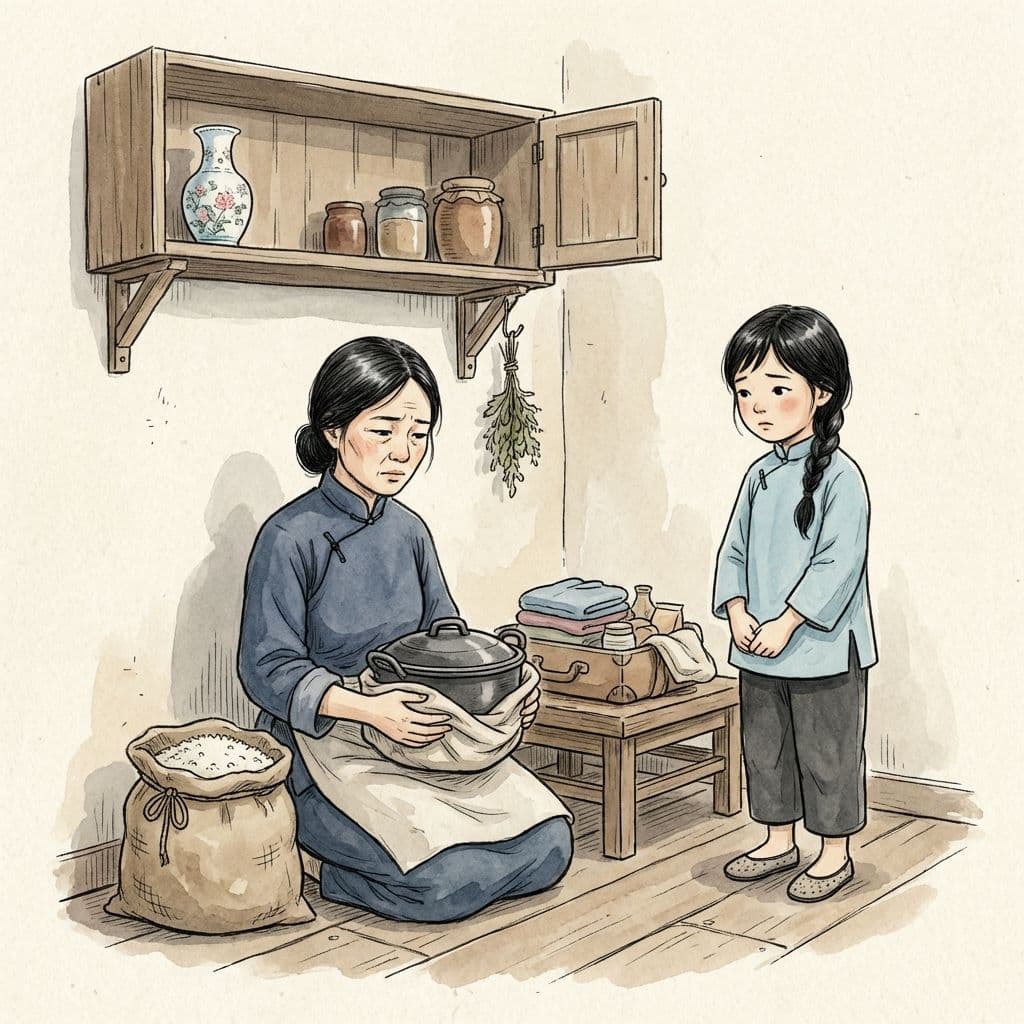
Then came the packing. Mother moved with purpose. She didn't pack her pretty silk dresses or the porcelain vase she loved. Instead, she took the big bag of rice from the pantry. Then, she did something strange—she picked up her heavy iron cooking pot. 'Why that, Mama?' I asked. 'It's so heavy.' She smiled a tired smile. 'Because, Mei, wherever we have this pot and some rice, we have a home. It will feed us.' She wrapped it in cloth like it was a precious jewel.
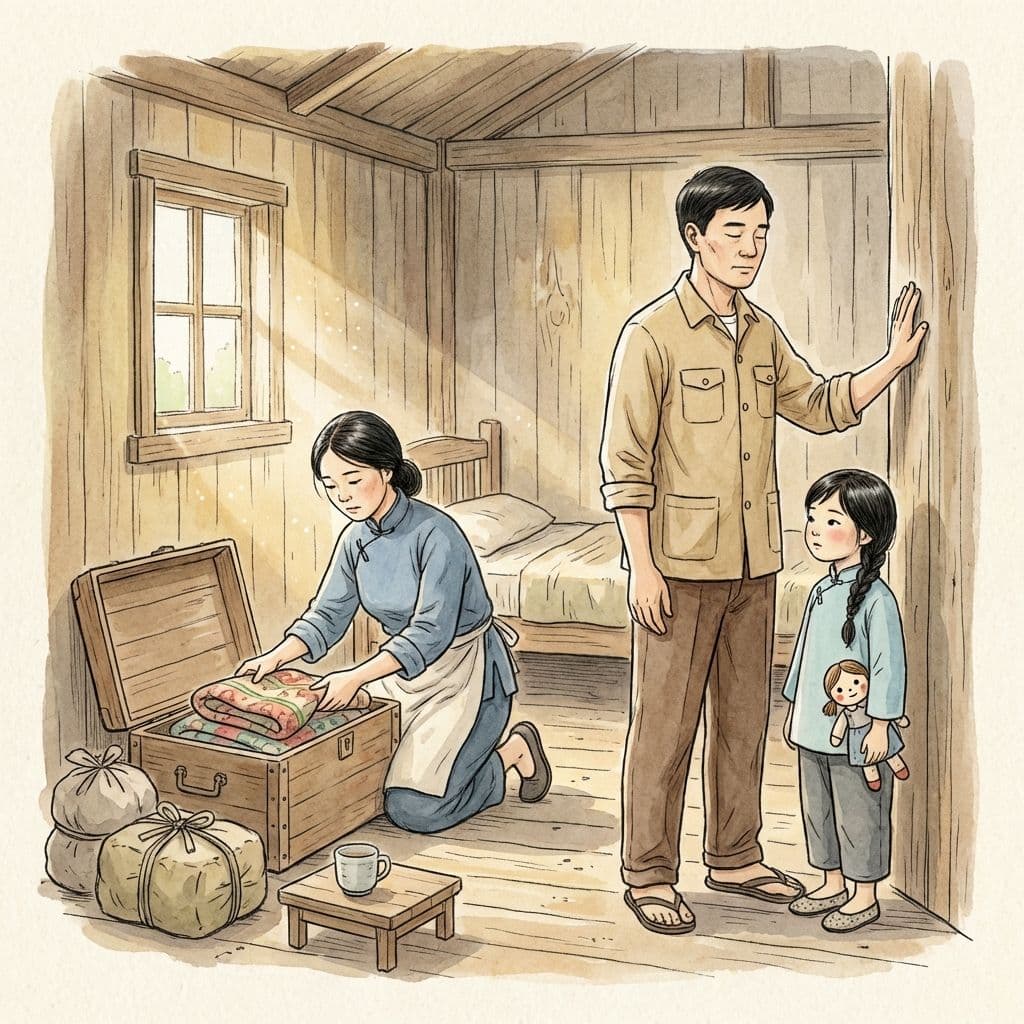
While Mother packed, Father did something I will never forget. He didn't pack clothes. He walked slowly to every corner of the house. He ran his rough hands over the doorframe, feeling the wood grain. He traced the shape of the window. He stood in the center of the room and closed his eyes, breathing in the smell of the house. 'What are you doing, Baba?' I whispered. 'I am memorizing it, Mei,' he said. 'I am packing the house inside my mind, so no one can ever take it away from us.'
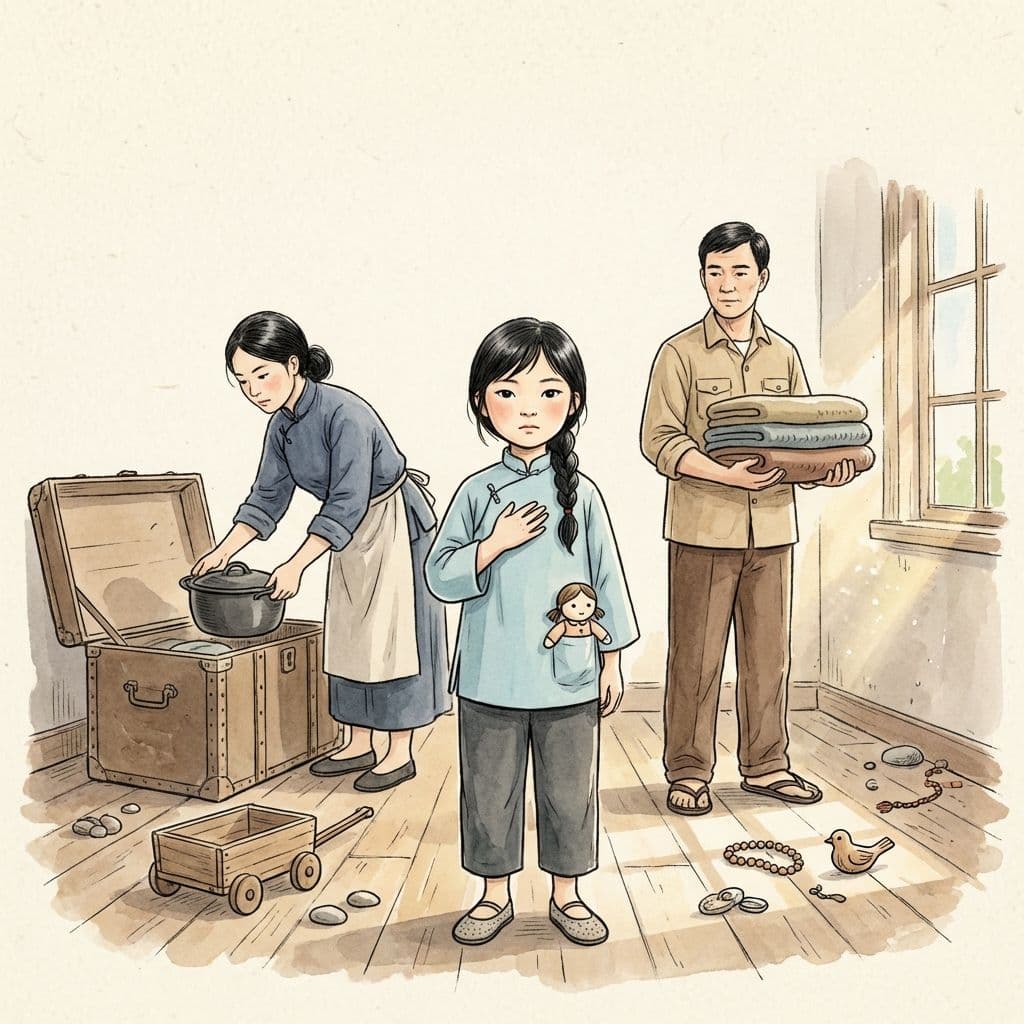
It was my turn. Mother told me I could only bring what I could carry in my own pockets. I looked at my wooden cart and my collection of pretty stones. I wanted to take them all. But then I looked at Mother carrying the heavy pot and Father carrying the heavy blankets. I had to be strong too. I picked up my small cloth doll, the one with the button eyes. I put her in my pocket and patted it. 'You are coming with me,' I told her. The rest I left on the floor.
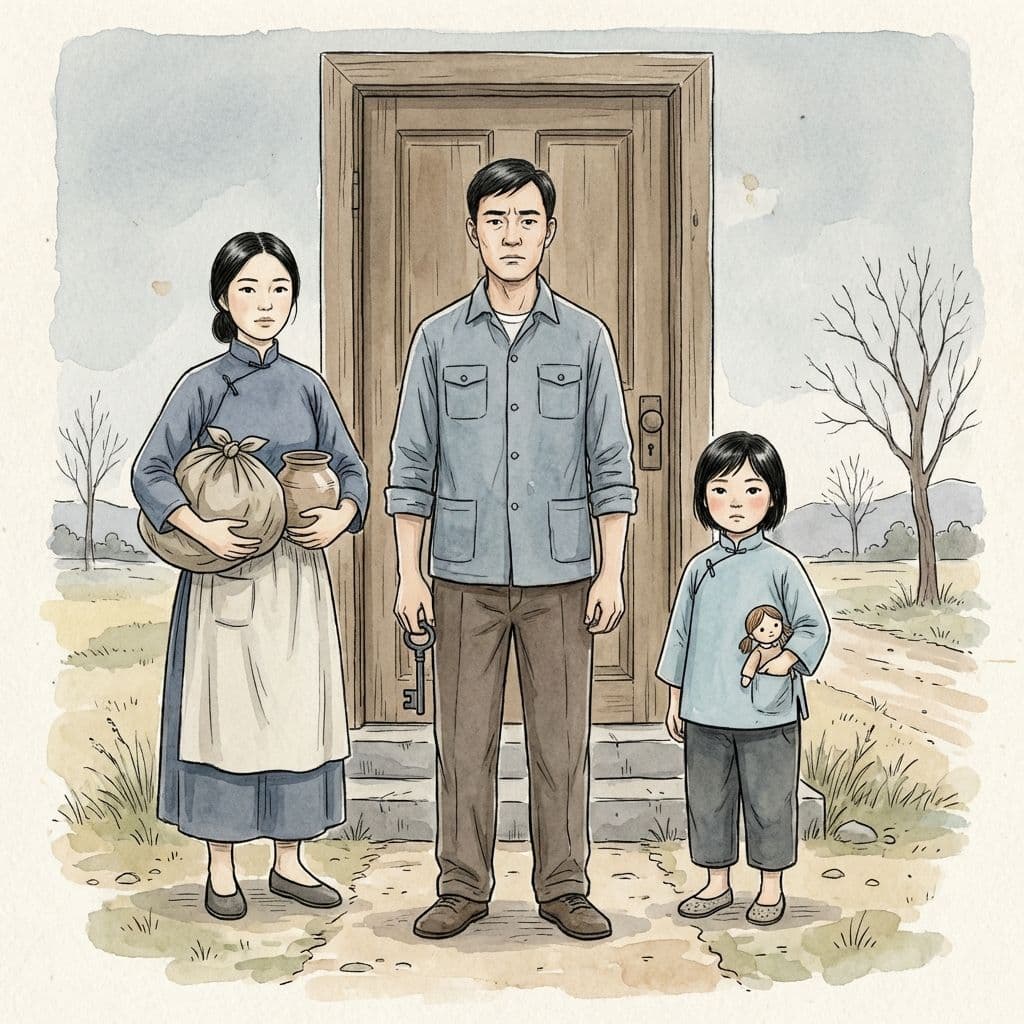
The next morning was gray and quiet. We stood outside our front door one last time. Father locked it with the big iron key, though we didn't know when we would use it again. We all stood there for a moment, looking at the house. It looked just like it always did, peaceful and sturdy. It was hard to turn our backs on it. It felt like leaving a friend behind. 'Let's go,' Father said, his voice tight. We turned toward the road and didn't look back.
When we reached the main road, I was surprised. We were not alone. It looked like the whole world was walking. There were families from our village and villages I didn't know. Old grandmothers were being carried on backs, and babies were sleeping in slings. It was like a river of people flowing slowly away from the danger. Everyone carried bundles on their backs. The road, usually so big and empty, was now crowded with the sadness of leaving.
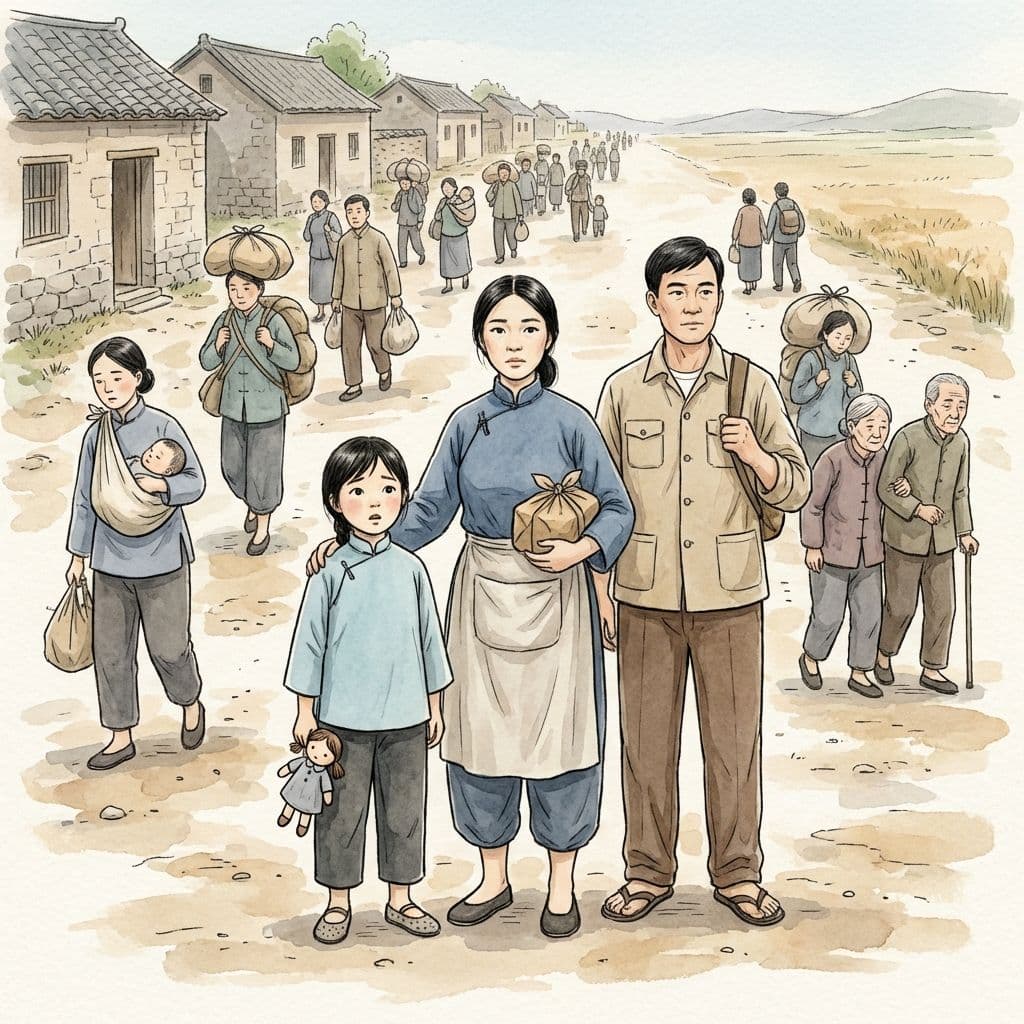
We walked for hours. The sun climbed high in the sky and beat down on our hats. My legs began to ache, and my doll felt heavy in my pocket. But what I remember most was the silence. Even with so many people, there was hardly any noise. No one sang. No one shouted. The only sounds were the shuffling of shoes on the dirt and the creaking of straps. It was a silence full of worry, a silence that said everyone was saving their energy just to keep putting one foot in front of the other.
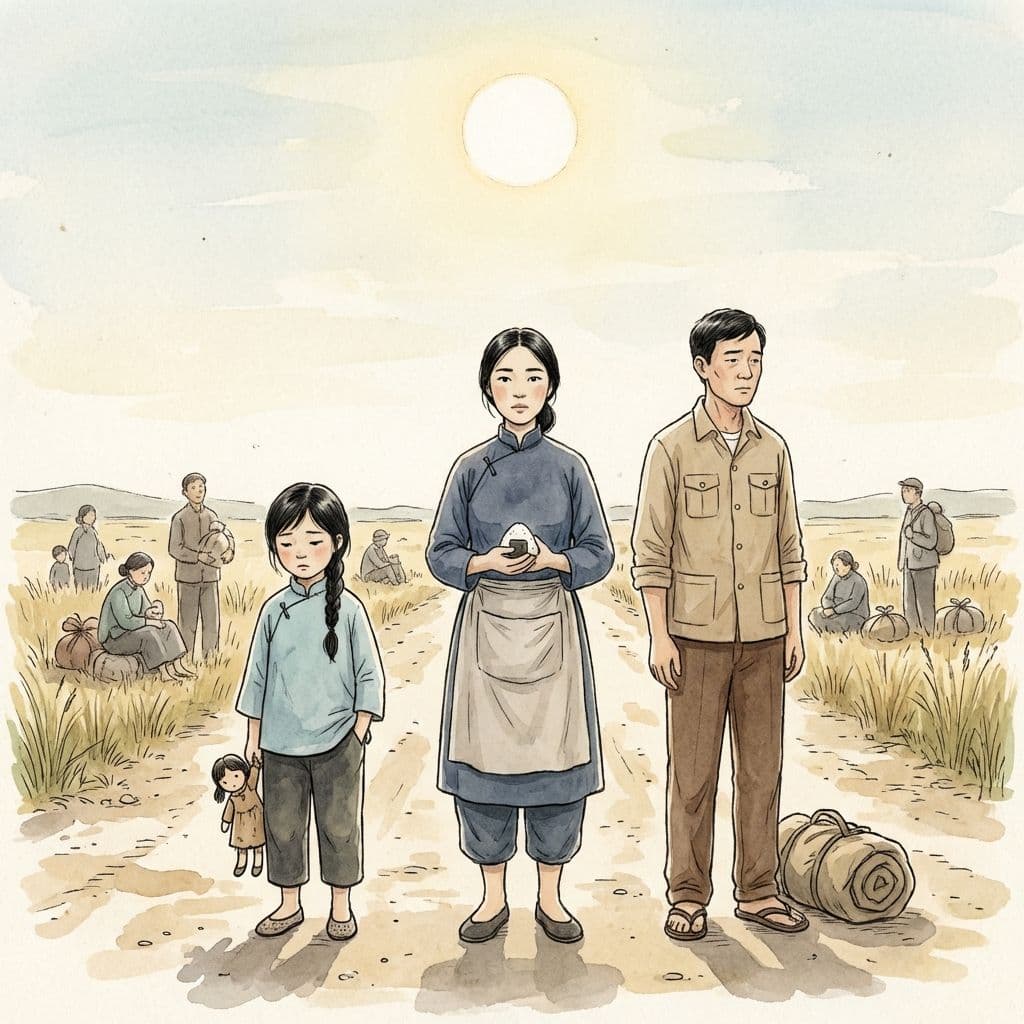
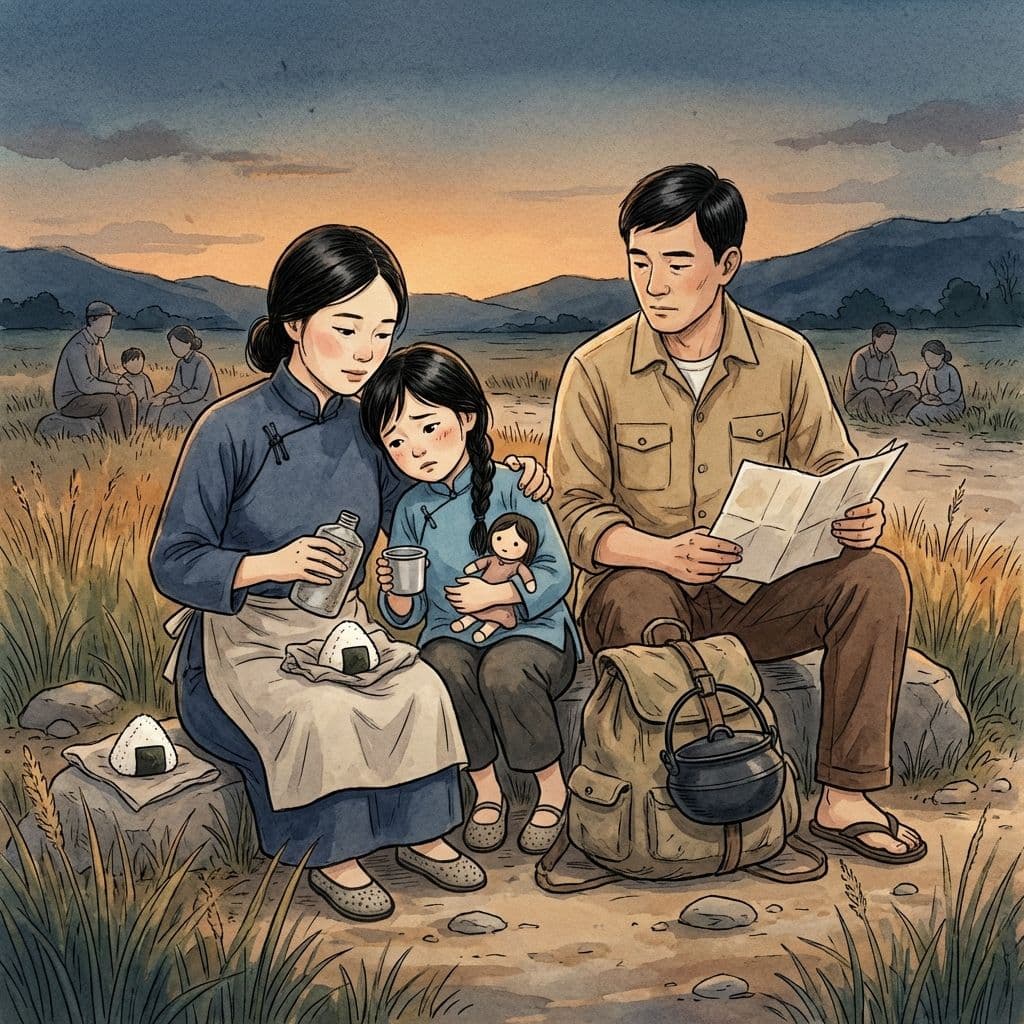
When the sun began to dip, we stopped by the side of the road. Mother unwrapped a small ball of cold rice for me. 'Eat, Mei,' she urged. I wasn't very hungry because my stomach was twisted with knots, but I ate to make her happy. Father stared back the way we came, his eyes scanning the horizon. I leaned against Mother, feeling the hardness of the iron pot in her pack pressing against my shoulder. It was uncomfortable, but it was also a promise of dinner, someday.
After days that felt like years, we arrived at the town where our relatives lived. Their house was made of gray stone. It looked strong. My Auntie came out to meet us, hugging Mother tightly. They cried, but they were quiet tears. We were safe. The walking was over. I thought that now everything would go back to normal, like it was in my village. I thought we would have our own room and our own quiet evenings. But I was wrong.
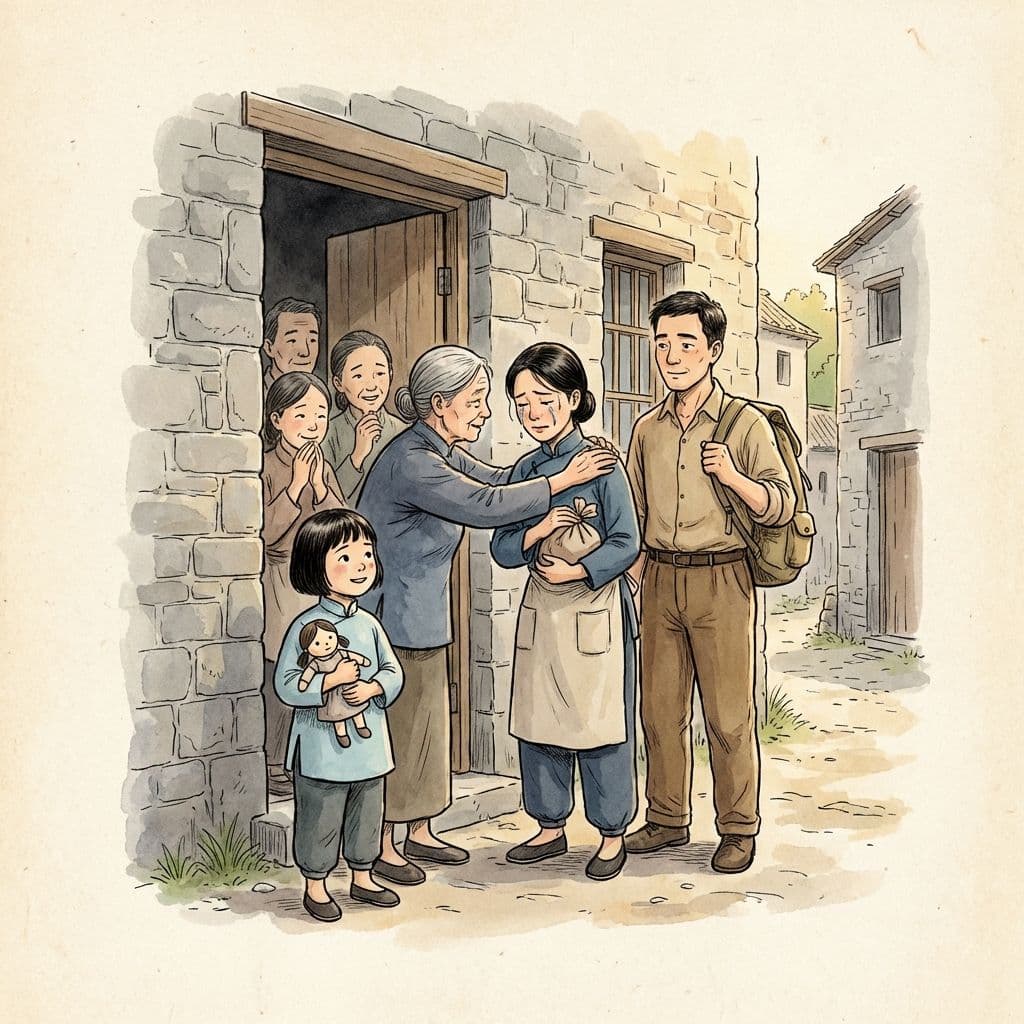
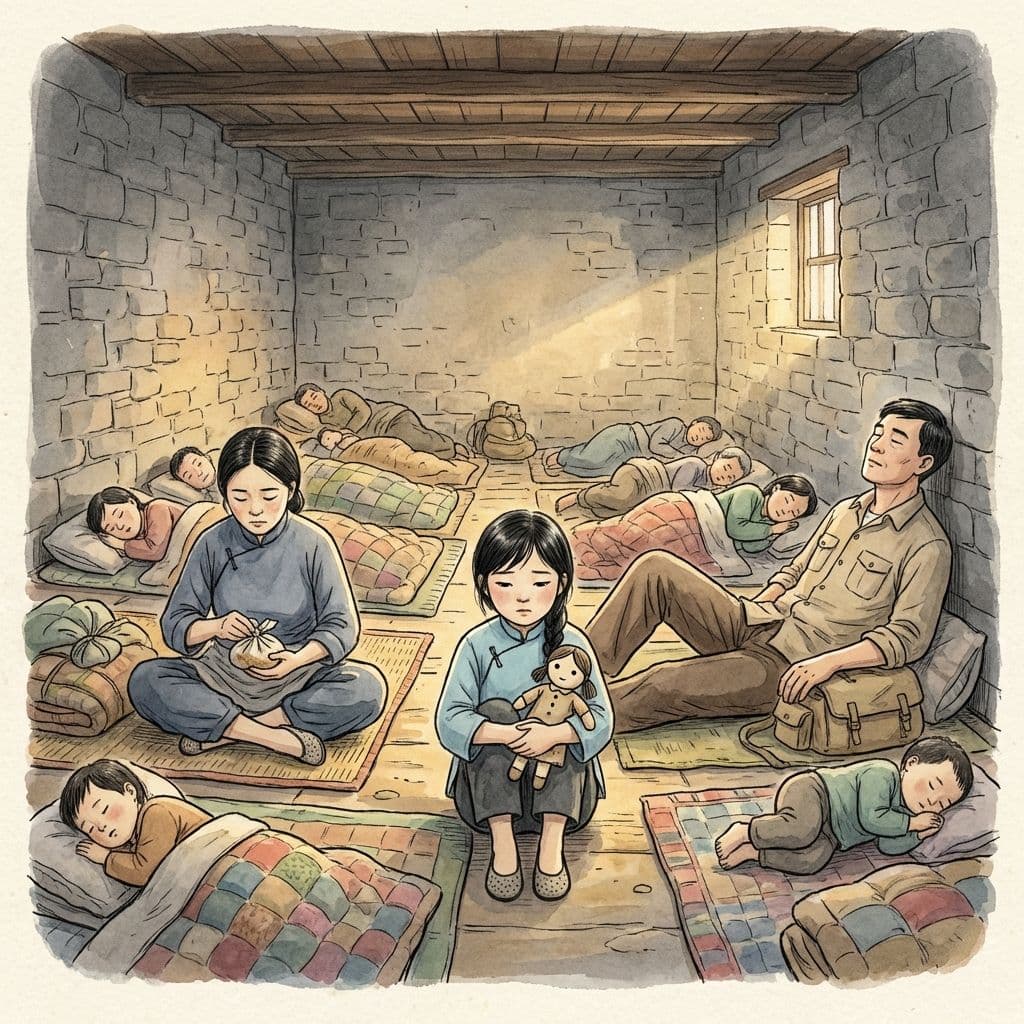
The house was bursting. We were not the only family who had come for safety. Cousins, uncles, and neighbors were all staying there. At night, we unrolled our mats on the floor, wall to wall. There was no space to walk without stepping on someone's blanket. The air was thick and warm. I missed my quiet corner in our old house. I missed the dust motes dancing in the sunlight. Here, it was dark and crowded, but at least the walls were thick and kept the danger out.
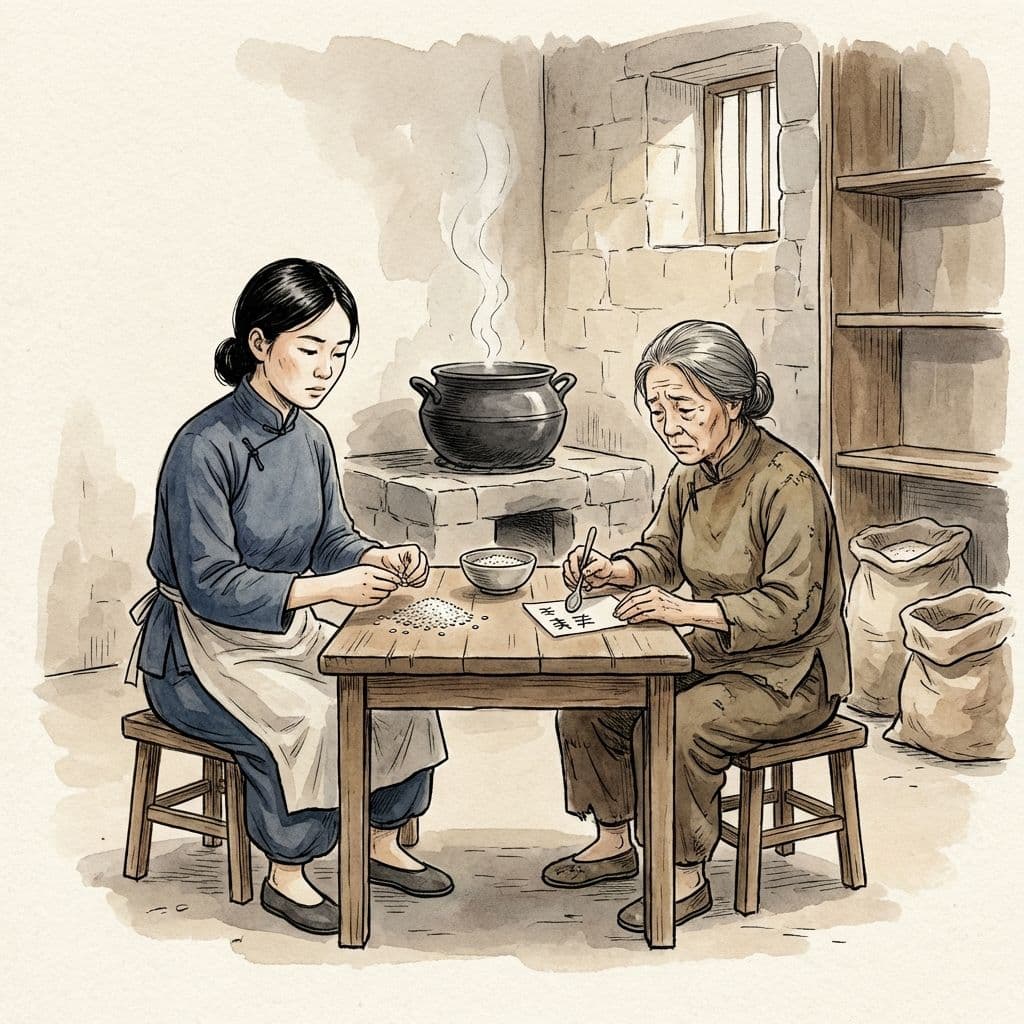
Food was hard to find here too. The market in this town was just as empty as ours had been. Mother and Auntie would spend hours counting the rice grains, trying to figure out how to feed so many people. The big iron pot Mother had carried all that way was put on the fire every day, but it was never full. The porridge became thinner, more like soup than rice. I learned that 'enough' was a word we used, even when it wasn't true.
One evening, we sat in a circle to eat. The steam from the pot smelled good, but faint. Mother ladled the porridge into my bowl. It was warm and comforting. I ate quickly, feeling the hunger in my belly. Then, I looked at Mother's bowl. It was barely covered at the bottom. She was eating very slowly, taking tiny sips. 'Mama, you didn't get enough,' I said. She shook her head and smiled, smoothing my hair. 'I am not hungry today, Mei. You are growing. You need it more.'
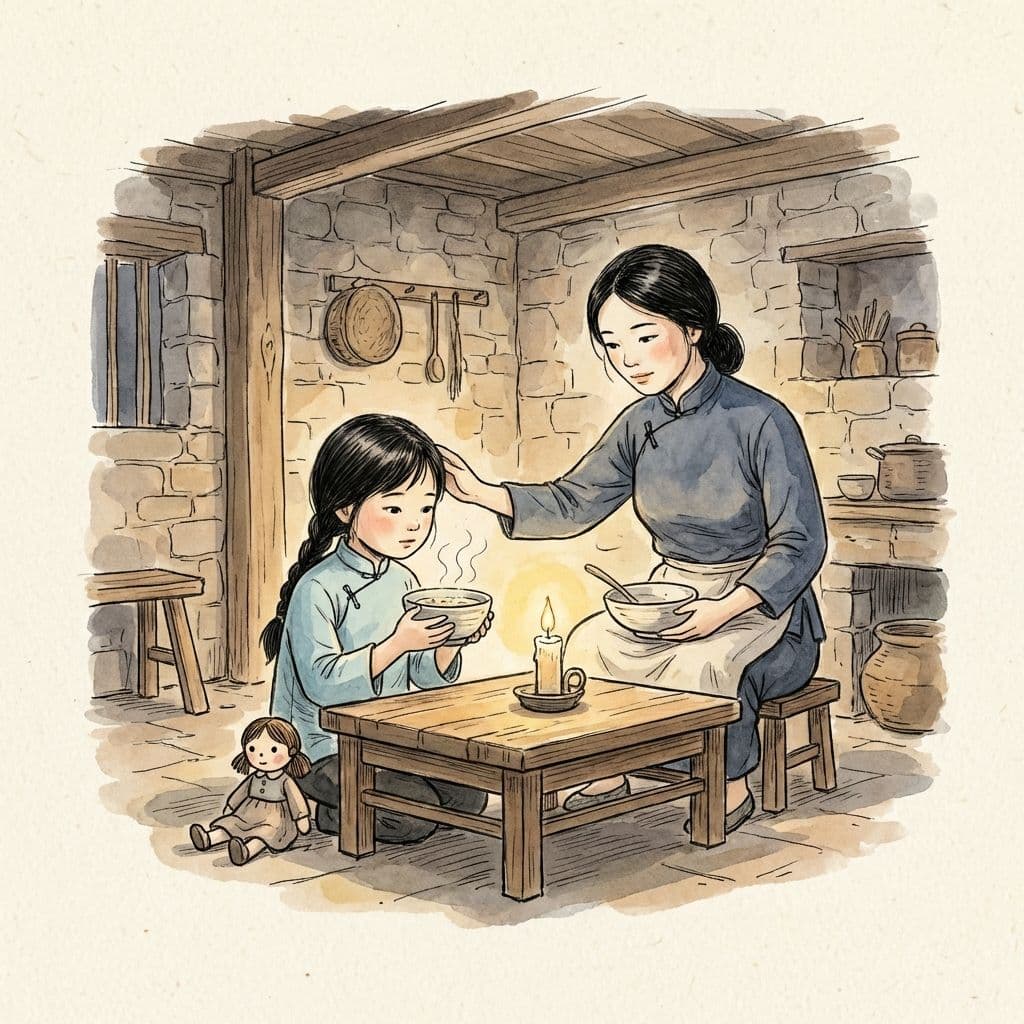
I couldn't sleep that night. My belly was full, but my heart felt strange. I lay still in the dark and listened. I heard Mother's stomach rumble, a loud, growling sound. Then I heard Father whisper, 'You must eat, wife.' And Mother whispered back, 'If I eat, the children will go hungry. I can endure it. They cannot.' Hearing those words changed something inside me. I realized that her smile at dinner was a mask. She was hungry, but she loved us more than she loved food.
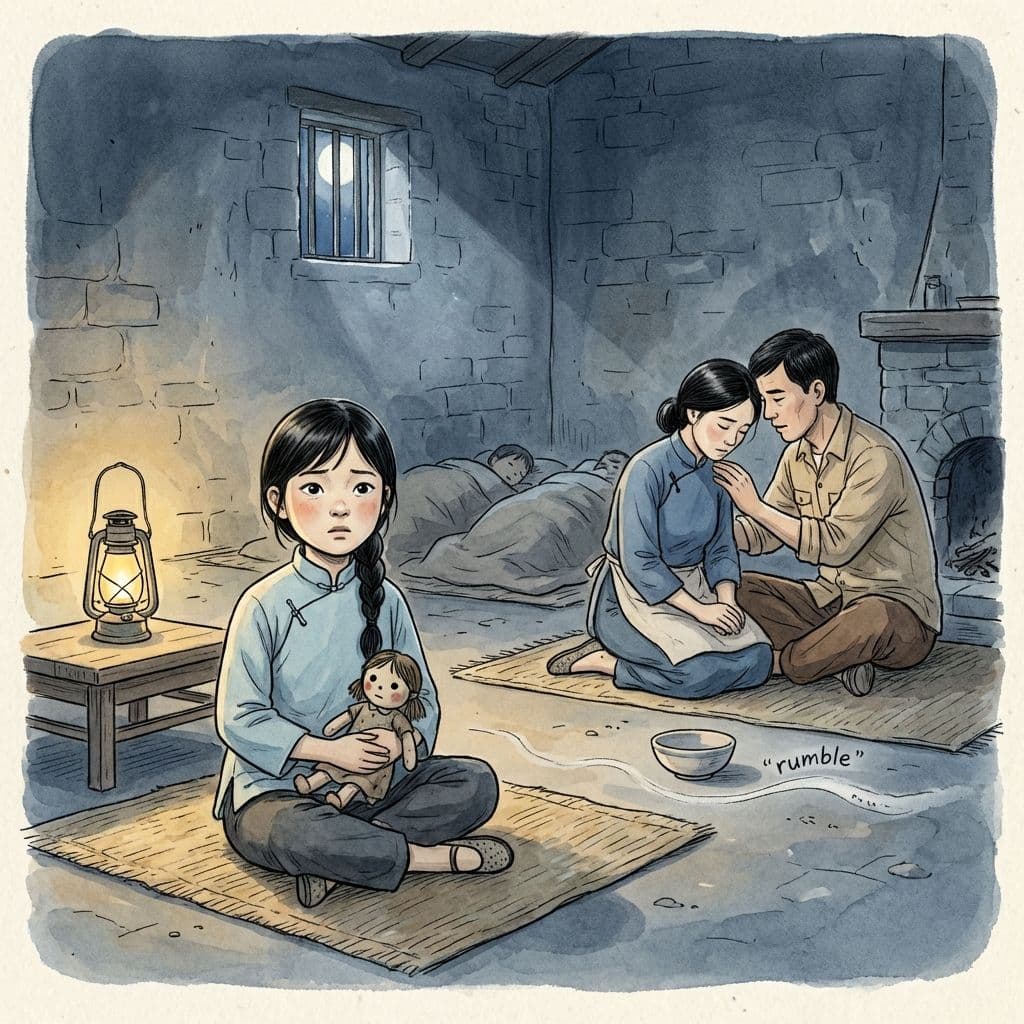
The next morning, the sun rose just like it did in my old village, but I felt different. I wasn't just a child anymore who played in the dirt. I watched my parents moving around the crowded room. Father, with his house memorized in his mind, and Mother, with her empty belly and full heart. I understood now what the heavy burden was. They were carrying the weight of the world so I didn't have to. I squeezed my doll, promising myself I would be brave and grateful, just like them.
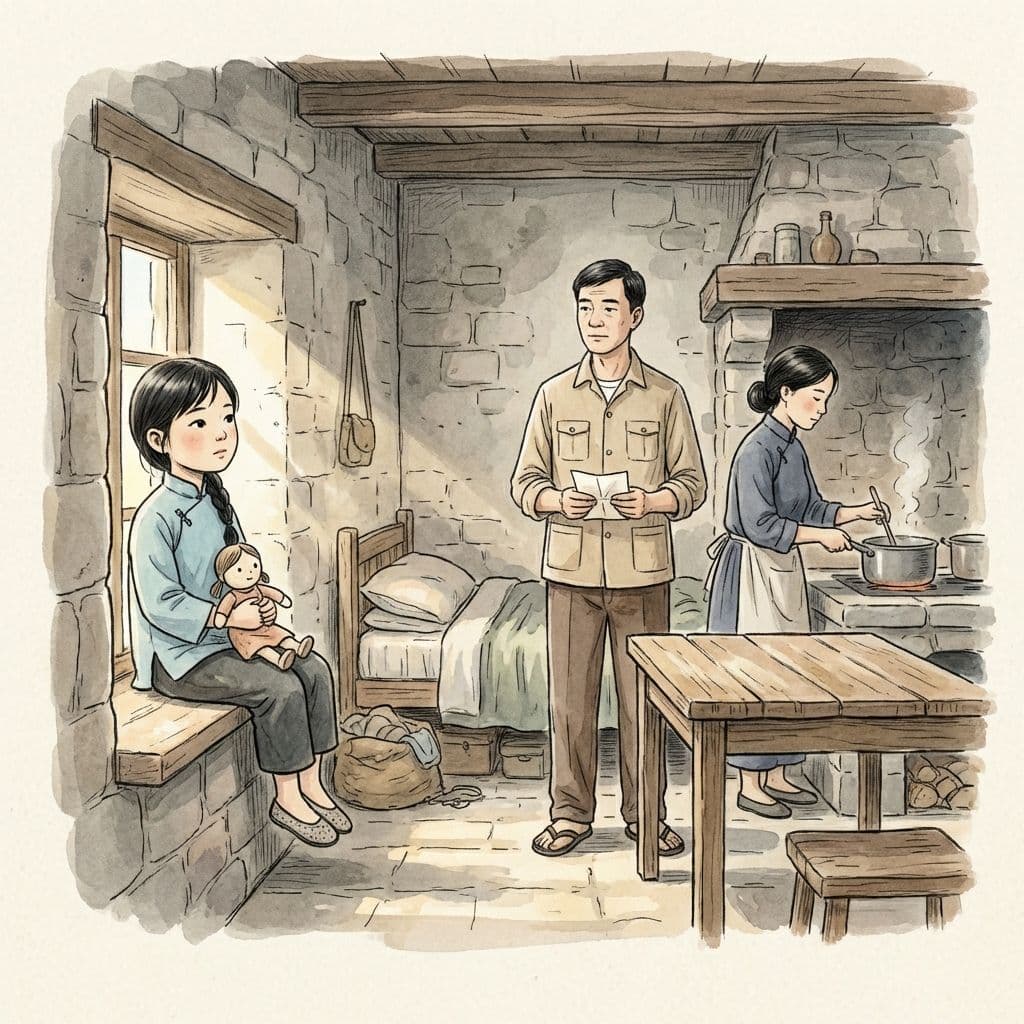
We stayed in the stone house until the danger passed. It was a hard time, but it was also a time of great love. I learned that peace is not just about having a quiet village or a full market. Peace is something that is built by people. It is built by fathers who remember homes to keep hope alive, and by mothers who give up their share so their children can grow. I never forgot the taste of that thin porridge, nor the size of my mother's love. It taught me to be kind, always.